Turning a complex system into a structured decision problem.
Problem
In complex systems, reliability modeling is not just a technical task.
Multiple components, limited data, and different constraints make it unclear where to start.
Multiple components, limited data, and different constraints make it unclear where to start.
Approach
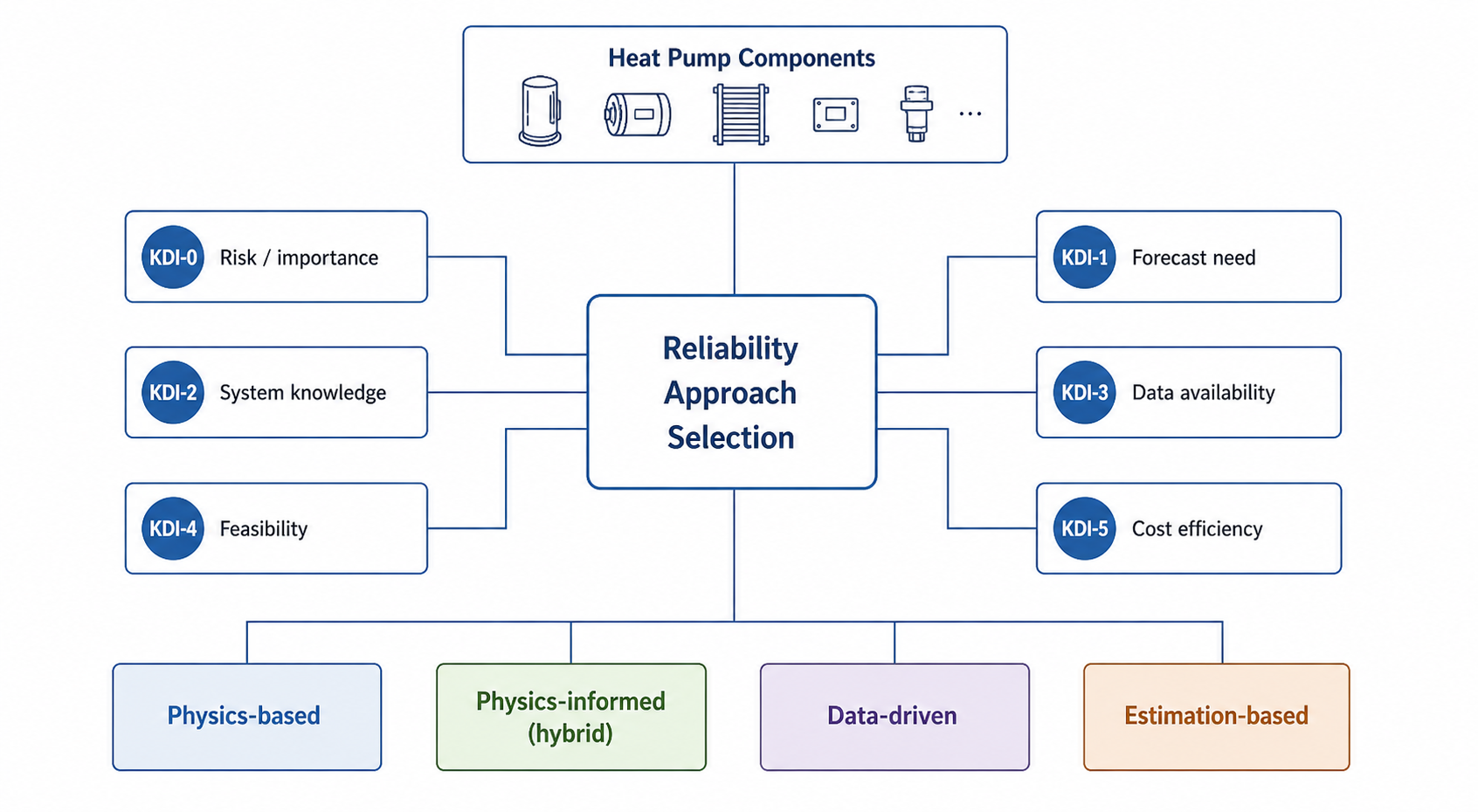
I developed a structured framework to prioritize components and guide the selection of suitable modeling approaches based on system context, data availability, and decision needs.
Outcome
The framework provides a clear path from system-level complexity to actionable modeling decisions, enabling focused and efficient reliability analysis.


What I did
• Defined a structured decision logic for reliability modeling
• Combined system knowledge, field data, and constraints
• Developed criteria for selecting modeling strategies
• Combined system knowledge, field data, and constraints
• Developed criteria for selecting modeling strategies
What was difficult
• Balancing theoretical approaches with practical feasibility
• Handling limited and heterogeneous data
• Making decisions under uncertainty
• Handling limited and heterogeneous data
• Making decisions under uncertainty
What I learned
• Structuring the problem is more important than choosing the model
• Not all components require the same level of modeling depth
• Clear decision logic improves both analysis and communication
• Not all components require the same level of modeling depth
• Clear decision logic improves both analysis and communication
Reference:
PHM Society Conference 2025 (accepted): https://doi.org/10.36001/phmap.2025.v5i1.4463